Aside from a few up ballot contests, including for U. S. Senate (a long shot in November), the election of precinct chairs and county chair, voting in the Democratic primary will be a lot less interesting
Note: If you're a registered voter – Republican, Democrat, Libertarian, Independent, Green or other – mark your calendar for Tuesday May 29th, 2012. Texas will hold its open primary elections on that day, and about the only reality show in town will be the contest for the Republican presidential nomination, plus a couple of important local races. The Democratic Party primary in Hays County arguably will be less consequential than the Republican primary since there are far fewer, if any, contested local races among Democrats. Redistricting has left the county
 split into three congressional districts – the 21st, 25th and 35th – so, the county's influence in picking winners in the congressional races is now so watered down as to be negligible. Aside from a few up ballot contests, including for U. S. Senate (a long shot in November), the election of precinct chairs and county chair, voting in the Democratic primary will be more an exercise in housekeeping and a lot less interesting. The one exception for east Hays County Dems will be the primary contest for the new 35th congressional district. Obama for President, we know, will be a shoo-in among Dem voters across the state, despite primary opposition from two or three little known challengers.


 Texas allows "open" primaries, which means voters of any political stripe can vote in the other party's primary and still vote for the candidate of their choice, from President on down, in November. It's called 'cross-over voting' and it's perfectly legal. Only party officials are prohibited by rules from voting in the other party's primary. The open Republican primary in Hays County will feature not only the contenders for president, the Fearsome Foursome – Mitt Romney, Rick Santorum, Newt Gingrich and Ron Paul, but also two important local races.
 Will Conley

 Cutler & Ratliff
The two local Republican races are for Sheriff and County Commissioner Precinct 3. Incumbent Sheriff Gary Cutler is seeking re-election to his first full 4-year term. The likable former Sheriff Tommy Ratliff is challenging Cutler. The county commissioner's race has up-and-comer Sam Brannon of San Marcos challenging two-term incumbent Will Conley of Wimberley. The winners will be the only candidates for these two offices on the ballot in November. No Democrat had filed for sheriff or Pct. 3 commissioner as of the deadline Friday March 9. So for Democrats, what you see is what you get to vote for in November. The only way Dems can influence these two critical races is by voting in the Republican primary. Not surprisingly, Cutler, Ratliff, Conley and Brannon are all actively courting Democrats and Independents, who could very likely swing the election their way. The offices they are vying for carry considerable authority and power, and the winners will be with us for the next four years. Dems and Indies should be discussing amongst themselves which primary to vote in. We heartily suggest the Republican primary. You can help pick a winner or a loser and have some fun while doing so. Either way, please VOTE.
Brannon: "I spent the better part of 20 years
solving problems for clients"
solving problems for clients"
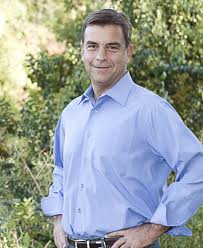 Even before San Brannon decided to challenge Will Conley for county commissioner in Pct. 3, his confrontations with officials against closed county government practices and runaway spending and debt began to earn him the ire of critics and cronies. Most of the attacks Sam has received have centered on his current job status, or lack thereof. We know that when attacks become personal, it's a sure sign the critics are running from the truth and their own bad practices. Sam answers his critics in the Q&A.
With the primary election on the way, the candidates’ backgrounds are relevant. The RoundUp certainly welcomes background statements from Mr. Conley, as well as from Sheriff candidates Cutler and Ratliff.
RoundUp: Tell us about your professional experiences, past and present.
Brannon resume/click to enlarge
 Brannon: My resume is attached, and you’re welcome to post it.
I’ve been working with SMCISD as a Substitute Teacher since January of 2011, and have been on long-term assignments since the beginning of the 2011-2012 school year. When the senior officer of the ROTC program at the high school was out for a few weeks in September, I was requested by the school Principal to fill in. As that assignment was ending, the Focus Program at the middle school had taken on new students and needed additional help, and I’ve been there since early October.
The Focus Program concentrates on kids with various challenges, such as slight autism or ADD, and who tend to have behavior or disciplinary problems. The goal is to help them progress with the help of individual attention, while still integrating them with the general student population, and without creating a disruption to the learning environment. It can be pretty challenging work some days.
RoundUp: Why did you choose substitute teaching?
Brannon: Hays County doesn’t have the kind of work that I used to do, so I realized that I’d probably have to find a new profession since I intended to make this my home. I enjoy working with kids, and have always related well with them. I’ve been a Big Brothers volunteer in the past, and have also done volunteer work with other youth organizations.
Teaching has interested me for a long time, and I’ve spent some time teaching English as a Second Language (ESL), and enjoyed it. I thought this would be a good way to help me determine whether I was interested in becoming a certified teacher.
RoundUp: What have you learned in school this time around?
Brannon: I have a great appreciation for the teachers and administrators. Their jobs are not easy. It has also been a good exercise in patience and understanding. Our young people and their families face many challenges.
RoundUp: Why just 4 days per week?
Brannon: I spend Tuesday of each week attending the Commissioners Court meetings and following up with staff or researching the issues.
RoundUp: You were a consultant in Turkey?
Brannon: One of my ESL clients was a medical doctor, and had just left her General Manager position at a pharmaceutical firm to co-found a consulting practice that serves European pharma companies with operations in Turkey. What began as a language review of one proposal led to me developing and presenting the final proposal, and that led to projects on market targeting and process design.
My ESL clients were largely business owners and senior executives of European subsidiaries, and we spent a lot of time talking business. Turkey is about 20 years behind the U.S. in business methods, so I was a great resource for them at times.
RoundUp: Your resume indicates that you spent 10 years in “Supply Chain Consulting and Software”. What is “Supply Chain”?
Brannon: “Supply chain” is a term used in the manufacturing industries that refers to a broad set of processes that involve purchasing materials, selling, manufacturing and being able to deliver the product, as promised. The goals are to eliminate waste, to decrease order delivery lead-times, and improve quality. In short, I helped companies improve their performance by making and delivering products better, faster and cheaper through a combination of process improvements and technology.
RoundUp: Your last role in the corporate world was as Vice-President at JCIT International. Explain the role and how you got there.
Brannon: JCIT, BORN Consulting and JD Edwards were business partners that offered complimentary products and services to manufacturers, and we regularly worked on projects together. I developed a solid reputation in sales and engagement management at JD Edwards and was hired to run a region for BORN, and then later was recruited by JCIT to run their North American sales.
At JCIT I reported jointly to the CEO and the COO. I had four sales people that would qualify the opportunities and set the appointments, and then I was on the road 3 weeks out of the month visiting the management teams of our clients, walking plant floors, and creating plans to help them improve their business.
JCIT revolutionized American manufacturing during the late 80’s and 90’s with their Demand Flow methods. Jack Welch, then the CEO of GE, sang praises for the way JCIT transformed GE’s manufacturing businesses.
RoundUp: How did your business background prepare you for public office?
Brannon: I spent the better part of 20 years solving problems for clients, and for my employers. I come from industries where high degrees of complexity and ambiguity are the norm, and that presents interesting challenges in securing new business and finishing projects on-time / on-budget / as-expected. My job was to bring order and predictability in chaotic environments.
My constituents were the people in my firm, our business partners, and our clients. My clients often were literally betting their careers on the success of doing business with me and my firm. I take that seriously, and built a reputation for success, professionalism and leadership.
I have a lot of experience at processing information, context, personalities and patterns in real-time, and keeping track of what we knew and don’t know. I also had to account for the likelihood that there were things that we weren’t yet aware we didn’t know. The environment was often high stress, and I became convinced of the power of honest, direct and thoughtful communication.
In short, I developed a solid reputation for knowing my business and earning the trust of my constituents. Taxpayers expect both of these.


